

According to the U.S. Bureau of Labor Statistics, the total number of part-time workers was 4.465 million as of June 2025. If you manage part-time staff, you know the struggle of tracking their irregular schedules and varying part-time work hours per week. Manual timekeeping creates payroll errors, compliance headaches, and disputes over recorded hours.
Part-time employees work different shifts, punch in at multiple locations, and change schedules weekly. You’re left juggling spreadsheets, handwritten timesheets, and guesswork that costs your business money.
Smart time and attendance tracking tools solve these problems by capturing accurate data and reducing administrative work. Let’s discover the best time-tracking solutions that make managing part-time hours simple and reliable.
Hardware-Based Time Tracking Solutions
Physical time clocks provide reliable time and attendance tracking. Such systems run even when your internet goes down. Modern hardware fits different budgets and workplace needs while delivering consistent performance.
These time tracking solutions include the following:
Fingerprint Time Clock
Fingerprint time clocks scan fingers to verify who’s punching in. Every person has different fingerprints. So employees can’t clock in for their friends.
You mount the device near your main entrance, where workers can put their finger on the scanner. The system reads the print in seconds.
The tracking system further functions as a work hours calculator that tallies time worked. Data then gets stored on the device and uploaded to your software later.
Fingerprint time clocks work great in environments where hands get dirty. Sensors read through minor cuts and calluses without missing readings. For maintenance, clean the scanner and update the software.
Facial Recognition Time Clock
Facial recognition time clocks use cameras to identify faces. Employees look at the device to punch in. No touching means better hygiene for everyone.
The camera works in different lighting conditions and recognizes faces with glasses or hats on. The system stores facial templates securely and updates them as employees age or change appearance.
Setup requires proper camera positioning for optimal performance throughout the day. Key benefits of facial recognition as a time and attendance solution include:
- No touching reduces germs
- Fast scanning speeds up lines
- Works with safety equipment
RFID Time Clock
RFID time clocks use cards or key fobs for punching in. Employees wave their cards near the reader without inserting or swiping anything. The system then reads the unique card ID and records the time.
You can set different access levels for different workers. New employees get cards on their first day, and lost cards get turned off through your software. The system helps you track work hours while also flagging suspicious card activity.
Battery-powered readers work in locations without electrical connections, making installation flexible. These cards can last for years with regular use.
Software and Cloud-Based Solutions
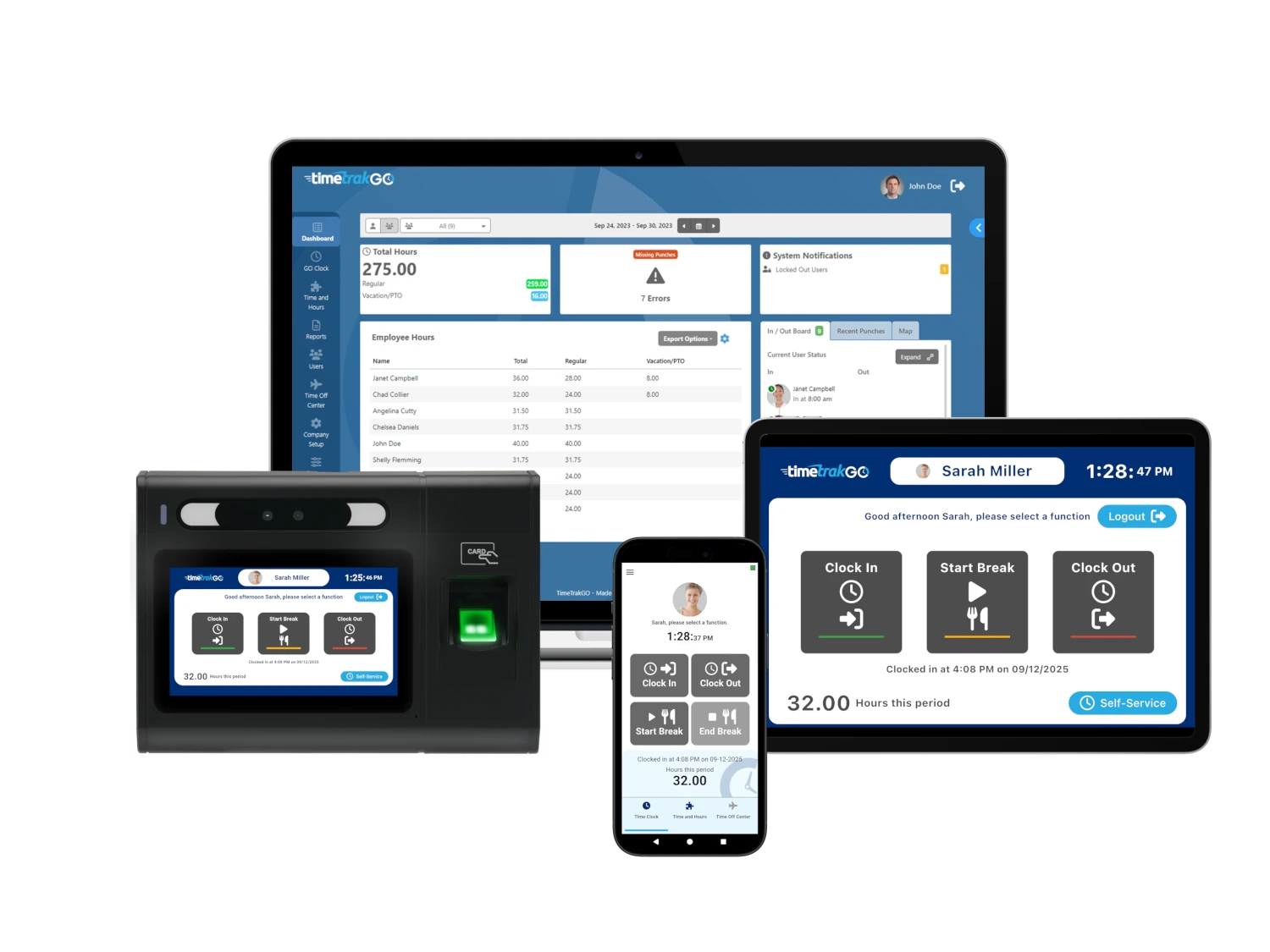
Time and attendance software puts all your data in one place. Cloud-based systems let you access information from anywhere with an internet connection. Real-time reporting shows you exactly who’s working and when they started their shifts.
Online time clock systems work on phones, tablets, and computers. Field workers and remote staff can log hours from job sites or their home offices.
Cloud time clocks automatically back up your data and handle software updates without IT involvement. The system scales easily as your business grows without requiring additional infrastructure investments.
Integration capabilities connect with existing payroll systems to eliminate double data entry. In addition to time and attendance tracking, cloud-based solutions help you get insights on:
- Labor costs
- Productivity patterns
- Scheduling efficiency
Why Accurate Part-Time Hour Tracking Matters
With part-time employees, you need to track multiple shifts across various locations. Managing part-time work hours per week can get messy fast.
As a business owner, you should correct data for payroll and compliance reports. A weekly work schedule works better when you have good tracking data.
Part-time workers change their availability often. Some can only work mornings, while others need weekends off. You need systems that handle these changes without breaking down.
Implementation and ROI Considerations
Pick your system based on how many workers you have. Small businesses benefit from simple cloud solutions while larger operations need robust hardware installations.
Consider your budget for initial setup and ongoing maintenance costs. Part-time tracking tools pay for themselves through:
- Reduced payroll errors
- Administrative time savings
- Improved scheduling accuracy
Automated tracking cuts payroll processing time significantly compared to manual methods. Training workers takes just a few minutes, as the interfaces are easy to learn.
Part-time work hours per week become easier to manage with automation and alerts. Your team spends less time correcting errors and more time growing the business.
Advanced Features and Management Tools
Modern systems include innovative scheduling tools. Automated alerts tell managers when workers get close to overtime, and attendance point systems track who’s late or absent too much.
Reports show labor costs by department, project, or individual employee for detailed analysis. These analytics help you build better schedules and cut overtime costs. Besides, the time management software connects with payroll to cut data entry work.
Many time tracking systems now include mobile apps that extend functionality beyond the workplace. Apps let managers approve time cards from anywhere, and workers get texts about schedule changes.
Future-Proofing Your Time Tracking Strategy
Workforce trends point toward flexible schedules and remote work. Part-time work hours per week will change more as businesses adapt. This means your system needs to handle new requirements without major overhauls.
Cloud time and attendance systems get updates automatically. These updates involve new features and security patches. Online systems integrate with emerging technologies like AI to improve accuracy over time without user intervention.
By and by, time and labor management become smarter as data quality gets better. You get deeper insights into workforce patterns and productivity trends.
Simplify Your Part-Time Work Hours Per Week Management
Tracking part-time work hours per week doesn’t always have to create payroll headaches or compliance issues. Modern time-tracking solutions offer reliable hardware and cloud-based software that eliminate guesswork and administrative burden. The right system transforms chaotic scheduling into streamlined workforce management.
TimeTrakGO provides free onboarding with quick system setup guidance from our experienced customer care team. Our friendly US-based support offers free help anytime you have questions via email, chat, or phone.
Sign up today to eliminate your part-time hour tracking problems and focus on growing a successful business.